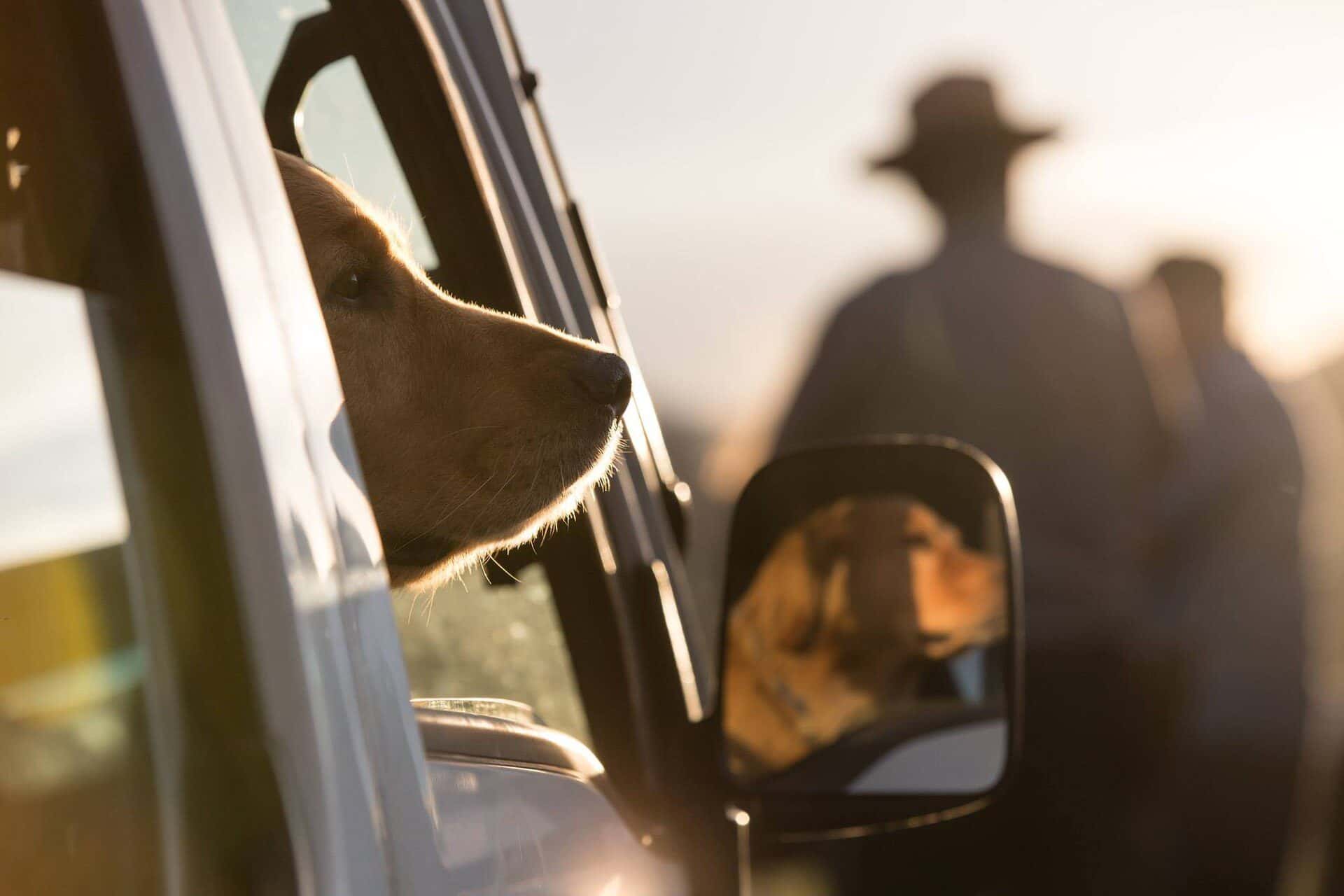
What Documents You Need to Take a Pet from Kazakhstan to Russia
What it takes to move a pet from Almaty to Russia: which documents to prepare and where to check them, how the border crossing works, what goes into the price of a dedicated trip and how to get a dog or cat ready for a journey of more than fifteen hundred kilometers.
Moving an animal from Almaty to Russia works as a dedicated trip: a whole minibus with driver is set aside for it, and the price is for the whole vehicle, not per pet. How the service works and what the trip includes is on our pet transport from Almaty page. The closest published benchmark is the Almaty–Astana route: from 200,000 ₸. That covers about 1,200 km one way, around 2,400 km in total with the vehicle returning to Almaty, fuel and two days of the driver’s work.
The road to Russian cities is considerably longer. Omsk is about 1,850 km via Pavlodar, Novosibirsk about 1,800 km via Semey and Barnaul; both trips are planned for a day and a half to two days with an overnight stop on the way. That’s why we price the specific city and dates rather than quoting from a ready-made price list: the calculation includes the distance there and back, the driver’s time and the trip format.
Now for the main thing — documents. To take a pet out of the country, you’ll need a veterinary (pet) passport with vaccination records, above all for rabies, a microchip and a veterinary certificate. Veterinary service requirements and the rules for moving animals within the Eurasian Economic Union (EAEU) change from time to time, so check the current list and deadlines with your regional veterinary service in advance. Below: how the trip works, how to prepare your animal for a long journey and what to tell us when you book.
How much pet transport costs and what goes into the price
The pricing logic is simple: you pay for the minibus’s work, not for a spot for your pet. The price includes fuel for the whole route, the driver’s work and the vehicle’s return run — after a one-way trip the Hiace drives back to Almaty on its own, and that mileage has to be counted too. Any minibus hire with driver is priced the same way; here the route is just longer than usual.
Hence the published benchmark within Kazakhstan: Almaty to Astana from 200,000 ₸ per trip, about 2,400 km of total mileage. Russian destinations are farther, so they cost more — exactly how much depends on the destination city, the dates and whether you need a return trip with passengers or the vehicle comes back empty.
- The price is for the whole 13-seat Toyota Hiace minibus, not per animal.
- Fuel, the driver’s work and the vehicle’s return run are built into the price.
- Published benchmark within Kazakhstan: Almaty to Astana from 200,000 ₸, about 2,400 km of mileage and two days on the road.
- Omsk: roughly 1,850 km one way via Pavlodar; Novosibirsk: about 1,800 km via Semey and Barnaul.
Documents for a dog or cat: what to prepare in advance
The division is simple: the list of documents is set by the veterinary services, not by the carrier. We handle the road and the logistics, and you get the paperwork done — in advance, at the state veterinary service where you live.
The basic set that the requirements are built around: a veterinary passport with vaccination records, a valid rabies vaccination, a microchip and a veterinary certificate for taking the animal out of the country. The rules for moving pets within the EAEU are updated from time to time, and at the border they go by the current version, so check the exact vaccination timing, the certificate form and how to obtain it with your regional veterinary service before the trip.
Don’t leave it until the day before: some procedures take more than a day, while the certificate, on the contrary, is issued closer to the travel date. You’ll get the exact timeline at the same office where you do the paperwork.
- A veterinary passport with vaccination records is the core of the whole document package.
- The rabies vaccination must be valid on the date of travel.
- A microchip is a standard requirement for moving a pet between countries.
- The veterinary certificate is issued by the state veterinary service before departure.
- Check current deadlines and document forms with your regional veterinary service: the rules change.
How the border crossing works
The minibus crosses the Kazakhstan–Russia road checkpoint with the passengers and the pet on board: there’s no need to get to the crossing separately or change vehicles. The animal’s documents are checked separately from the people’s, so it helps to keep them on top rather than at the bottom of a bag.
Nobody can tell you in advance how long control will take: it depends on how busy the checkpoint is on the day, so we build extra time into the schedule. It’s calmer for the animal that way — we run trips from Almaty to Russia with stops, water and walks, not in one dash to the finish.
- We go through the checkpoint together with you — no changing vehicles, no reloading.
- Keep the animal’s documents separate from the passports and within reach.
How to prepare your pet for a long journey
The most important part happens before departure. If the carrier shows up at home the day before the trip, it will stay a cage in the animal’s eyes. If the same carrier stands open for a couple of weeks with familiar bedding and a treat inside, it becomes a place of its own, one that isn’t scary. The same principle works with the car: two or three short drives around the city beforehand take away half the stress.
Don’t give a big meal before departure: a light meal a few hours before boarding is better, and on the road give water little and often. Water, a bowl and a supply of the usual food travel in the cabin, not in the luggage. A blanket or toy that smells of home calms more reliably than any medication, and if a sedative is really needed, it should be prescribed by a vet who knows your pet.
Heat is more dangerous for a dog or cat than cold. In winter the cabin warms up in a few minutes, while a summer run is best started early in the morning, before the air heats up, and an animal must never be left in a closed vehicle in a parking lot. We make regular stops for walks, always on a leash or harness — even a pet that’s calm at home can bolt in fright in an unfamiliar place.
- Get your pet used to the carrier early: leave it open with bedding a couple of weeks before the trip.
- The last big meal shouldn’t be right before boarding; on the road, give water little by little.
- Water, a bowl, the usual food and pee pads go in the cabin, not in the luggage compartment.
- A leash or harness at every stop, even in an empty parking lot.
- In summer we leave early in the morning: overheating is harder on animals than cool air.
- Sedatives only if a vet prescribes them, not on advice from the internet.
A car’s cabin or an airplane’s cargo hold
A plane is faster, and there’s no point arguing with that. But the ticket isn’t the whole journey: add a carrier that must match the airline’s exact dimensions, veterinary control at the airport, a limit on the number of animals in the cabin per flight, and taxis to the airport here and from the airport there. If you count the journey door to door rather than ticket to ticket, flying adds up to a lot of separate steps, and each one has to be arranged in advance.
The real difference begins when your pet doesn’t fit in the cabin. A large dog flies in the cargo hold: apart from its owner, with loading, engine noise and pressure changes, and there’s nothing you can do about what happens during the flight. In a car the animal rides next to you — you can talk to it, give it water, stop and get out if something goes wrong. For older and anxious pets, that’s the deciding argument.
It’s a different case when there are several animals or the whole family is moving. Then you need to compare not ticket to ticket but the whole logistics chain: crates, veterinary control at the airport, getting to the airport and from it in an unfamiliar city, shipping your belongings separately. In that situation, moving your animals in one vehicle covers the whole list.
- A plane is faster, but the ticket comes with a carrier, veterinary control and trips to and from airports.
- A large dog flies in the cargo hold, apart from its owner.
- In a car your pet is right next to you: water, stops and its owner’s voice the whole way.
Moving permanently: pets, owners and belongings in one vehicle
The most common reason for a long journey with animals is a move. A family, two cats, a dog, suitcases, boxes and appliances: splitting all that across separate trips is expensive and stressful. A 13-seat Toyota Hiace fits the people, the pets and the luggage — the animals in the cabin next to their owners, the belongings in the luggage compartment and on the free seats.
For moves, we drive all over Kazakhstan and to Russia: Omsk, Novosibirsk and, by arrangement, Barnaul, Kemerovo, Novokuznetsk and other cities. The highway to Omsk runs via Pavlodar: about 1,850 km, of which 1,400 to Pavlodar itself and about another 420 from Pavlodar to Omsk; we split the drive over a day and a half to two days, with an overnight stop agreed in advance.
The road to Novosibirsk is about as long — via Semey and Barnaul it comes to about 1,800 km, and the drive has to be split by an overnight stop, which we agree in advance along with rest stops. There’s one restriction on moves: personal belongings only — we don’t take commercial cargo.
- Pets, owners and luggage travel in one vehicle: we pick you up at your door and take you to your new address.
- Omsk via Pavlodar, Novosibirsk via Semey and Barnaul, with an overnight stop on the way.
- Personal belongings only: we don’t carry commercial cargo.
What to tell us when booking for an accurate quote
To give you a price, we need a few details. Usually it’s one message on WhatsApp, and you get an answer the same day.
Then we calculate the distance both ways, the driver’s time and the trip format, and give you a price for the whole minibus. If the trip is within Kazakhstan rather than abroad, benchmark prices for popular cities are on our intercity transfers page.
- Destination city and approximate departure dates.
- How many animals, what size and whether you have carriers.
- Whether any of the owners are coming along, how many people and how many belongings.
- Whether you need a return trip with passengers or the vehicle comes back empty.
- Your pet’s particulars: age, health, how it handles travel.



More articles

Almaty in 3 Days: What to See and Where to Go
What to see in Almaty in 2–3 days: a ready-made plan for each day. Day one is the city and the mountains above it, day two the nearby gorges, day three Charyn Canyon or the Kolsai Lakes. With honest distances and travel times.
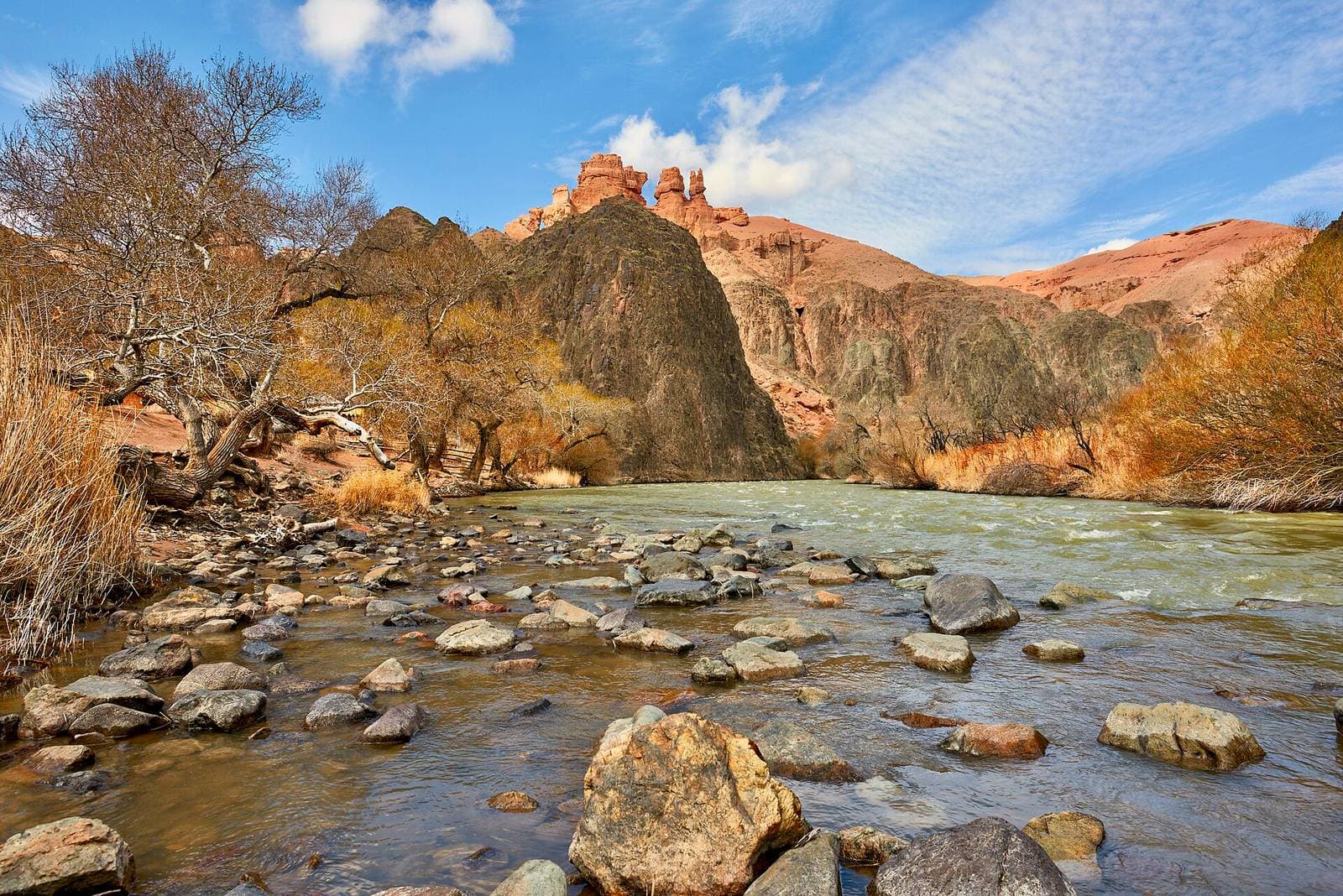
How to Get to Charyn Canyon from Almaty: All Options and Prices
Every way to get to Charyn Canyon from Almaty: on your own, by scheduled bus, on a tour or by minibus with a driver. We compare time, convenience and price, and cover the road via Shelek and Kokpek and the national park entry.
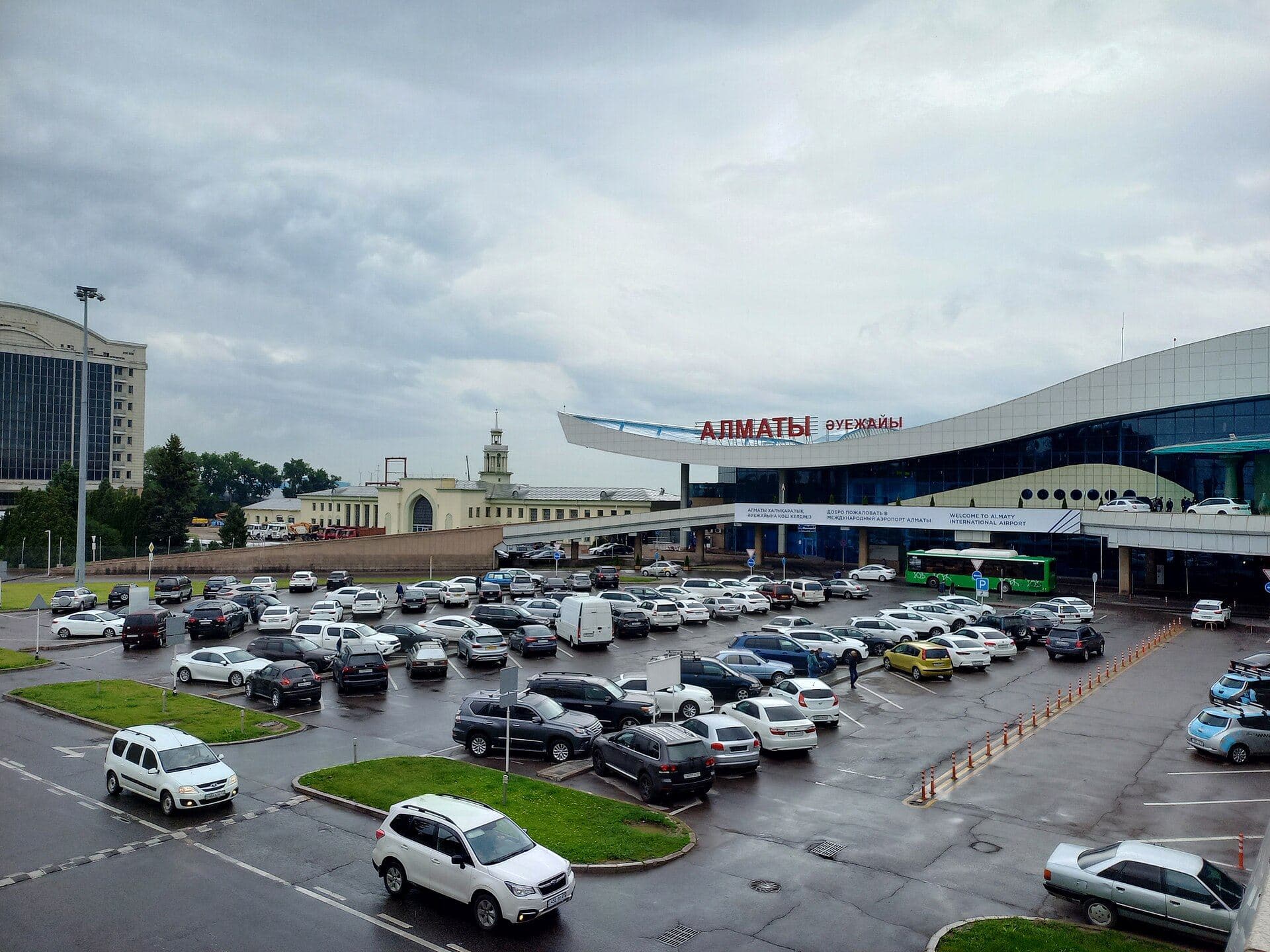
Taxi or Minibus from Almaty Airport: Which Is Better Value for a Group
How much an Almaty airport transfer costs and what the price depends on: economy and comfort taxis versus a minibus for the whole group. Why a Toyota Hiace is better value for a group of 5–13 — the price is for the whole minibus, not per person.
Frequently asked questions
How much does it cost to move a dog or cat from Almaty to Russia?
For Russia there’s a rule of thumb: about 150 ₸ per kilometer, including the return trip; the exact amount depends on the destination city and dates. You can start from the Kazakhstan benchmark: Almaty to Astana from 200,000 ₸, which is about 1,200 km one way, roughly 2,400 km with the vehicle’s return and two days behind the wheel. The road to Russian cities is longer, so we price them separately.
What documents do I need to take an animal from Kazakhstan to Russia?
The minimum the requirements are built around: a veterinary passport with vaccination records, an up-to-date rabies vaccination, a microchip and a veterinary export certificate. They’re issued by the state veterinary service, not the carrier. The rules and deadlines get rewritten from time to time, so check the list with your regional veterinary service before you even pick a departure date.
Does the pet ride in the cabin or in the luggage compartment?
In the cabin, next to its owner. Cats and small animals travel in a carrier, large dogs on a leash and securely restrained. The cabin has climate control, and we stop on the way for water and walks.
How long is the drive to Omsk and Novosibirsk?
Omsk is about 1,850 km via Pavlodar, Novosibirsk about 1,800 km via Semey and Barnaul. Neither drive can be done in a day, so it’s split over a day and a half to two days with an overnight stop on the way.
How does the border crossing work with an animal?
You go through the checkpoint in the same vehicle — no changing vehicles, no moving carriers around. The animal’s papers are checked separately from the people’s, so it’s handy to keep them in a separate folder within reach. Nobody can say in advance how long control will take, and that’s exactly why we keep extra time in the schedule.
Can you move several animals, their owners and belongings all at once?
Yes — that’s exactly why people book the whole trip. The cabin easily fits two or three carriers or a large dog with its owner, people sit alongside, and suitcases and boxes go into the luggage compartment and onto the empty seats. There’s one condition: the cargo must be personal — we don’t carry commercial shipments.
Real photos — not a manufacturer’s catalog
All photos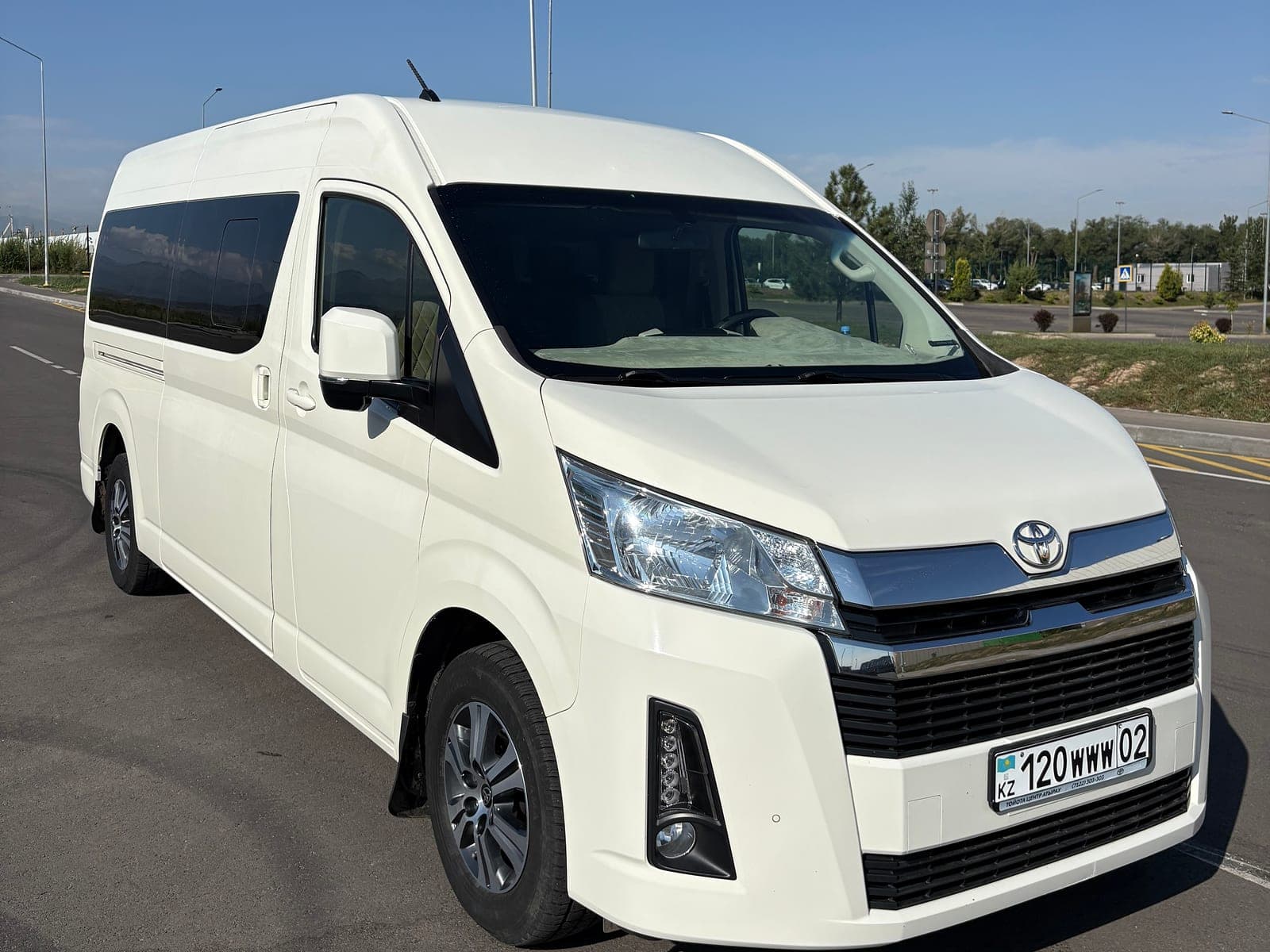
- Driver with 20+ years of experience
- Air conditioning and heating
- DVD · TV · MP3
- Soft reclining seats
- Electric door
- Luggage compartment
These photos show our own 13-seat Toyota Hiace with a high roof and a wide aisle between the seats. We took them ourselves: the cabin, seats and luggage compartment of this very vehicle. We have one minibus: this is the one that will come for you, with its own driver at the wheel.
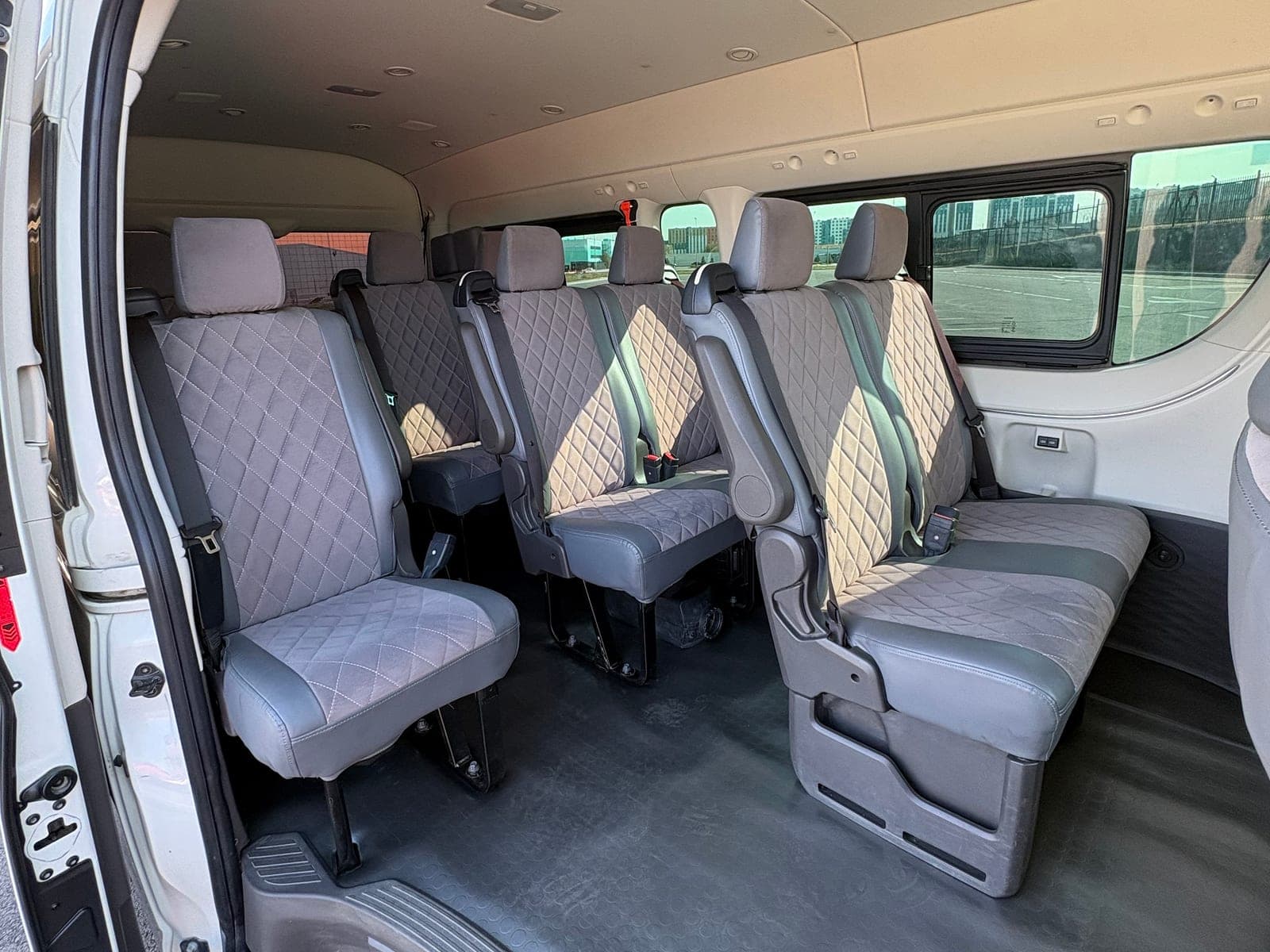 13-seat cabin
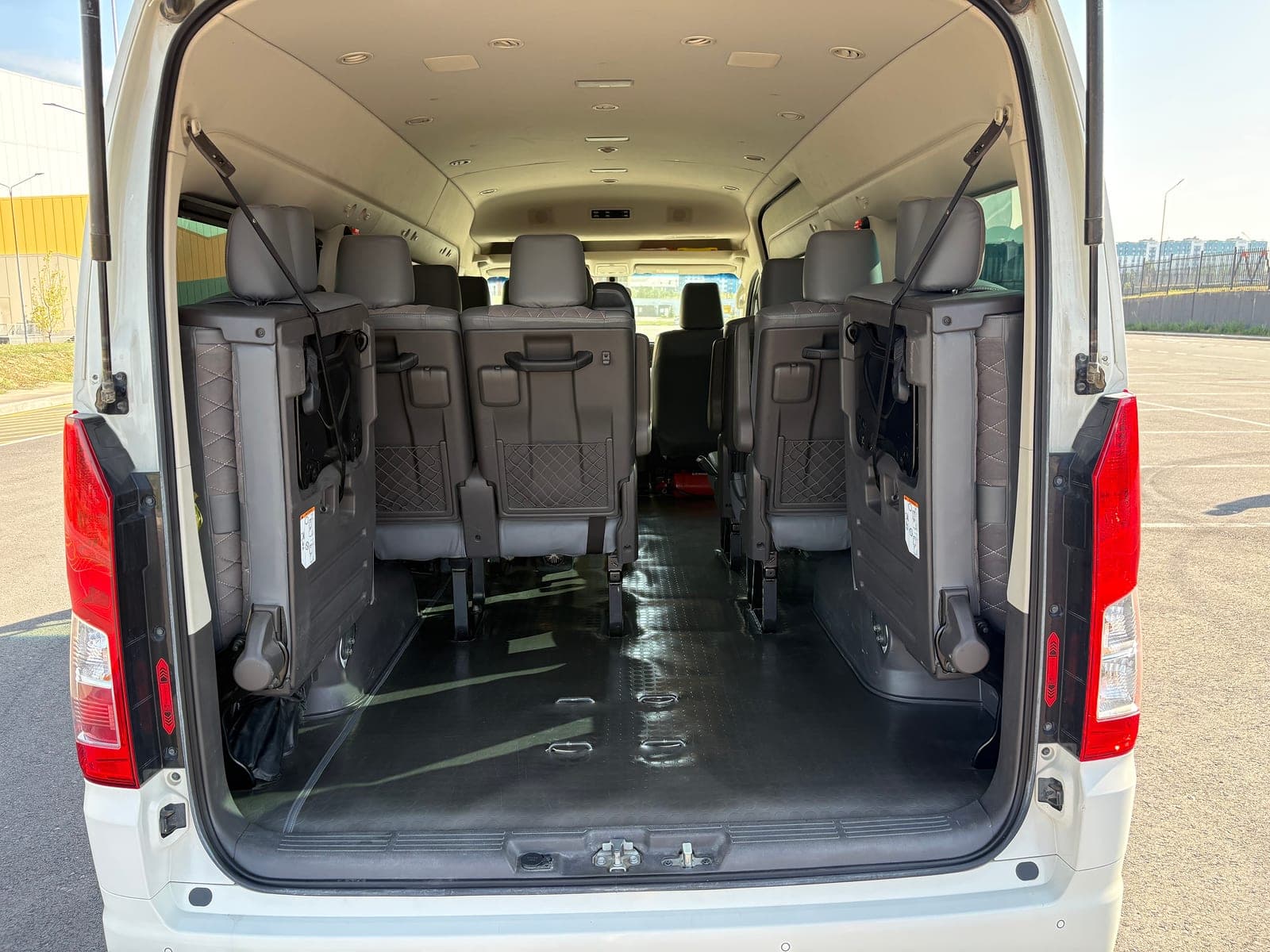 Luggage compartment
Tell us where and when
We’ll bring a Toyota Hiace minibus with a driver to any address in Almaty at the time you need. Available 24/7.